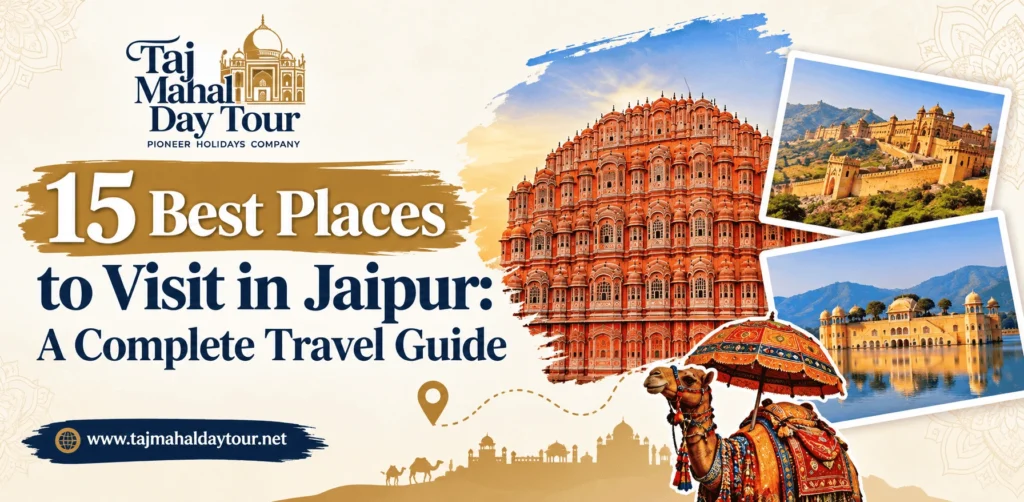
Jaipur is a city where a morning can start at a hilltop fort and end in a lantern lit bazaar, with a working royal palace in between. The Pink City anchors Rajasthan’s tourist circuit and forms one corner of the Golden Triangle with Delhi and Agra, so it gets busy, and choosing well makes a real difference to how much you enjoy it.
This Jaipur travel guide covers the best places to visit in Jaipur, grouped by area so you can plan a sensible route, along with timing advice, sample itineraries and practical tips. It is written from the perspective of Taj Mahal Day Tour, which arranges Jaipur tours from Delhi, so the routes below are built around realistic travel times rather than wish lists.
How to Plan the Best Places to Visit in Jaipur by Area
Most Jaipur tourist places fall into four clusters, and visiting them cluster by cluster saves hours in traffic.
- The Old City: City Palace, Hawa Mahal, Jantar Mantar and the main bazaars, all close enough for a short walk or auto ride.
- The Amer road: Amer Fort, Panna Meena ka Kund, Jaigarh Fort and the Jal Mahal viewpoint, which you pass on the way.
- The Aravalli ridge: Nahargarh Fort and Galtaji, best kept for late afternoon.
- The newer city: Albert Hall Museum, Birla Mandir, Sisodia Rani Garden and Patrika Gate.
15 of the Best Places to Visit in Jaipur
1. Amer Fort
Amer Fort tops almost every list of the best places to visit in Jaipur, and it earns the position. Raja Man Singh I began the fort in 1592 above Maota Lake, and its red sandstone and marble halls blend Rajput and Mughal design. Look for the painted Ganesh Pol gateway and the mirrored Sheesh Mahal. Amer is part of the UNESCO listed Hill Forts of Rajasthan. Arrive at opening time to beat the tour buses. Many visitors walk up or take a jeep, and since elephant rides raise animal welfare concerns, those are worth thinking twice about.
2. City Palace
Sawai Jai Singh II founded this palace complex in the early 18th century, and part of it is still the royal family’s residence. The museum galleries hold textiles, weapons, manuscripts and paintings, while the Chandra Mahal and the four decorated gateways in Pritam Niwas Chowk make it one of the most photogenic famous places in Jaipur. Allow around two hours. Ticket options differ for the museum and for extra sections, so check what is included before you queue.
3. Hawa Mahal
Built in 1799 by Maharaja Sawai Pratap Singh, the Palace of Winds has 953 small windows that let royal women watch street life without being seen. The facade is the attraction, so photograph it from across the road in the morning light rather than spending your whole visit inside. The entrance is at the back, which surprises many first timers.
4. Jantar Mantar
Sawai Jai Singh II built this astronomical observatory in 1734, and it is a UNESCO World Heritage Site. The huge stone instruments still measure time and track the sun, and the giant Samrat Yantra sundial is about 27 metres tall. The instruments make little sense without explanation, so a guide or audio guide is well worth it.
5. Nahargarh Fort
On the Aravalli ridge above the Old City, Nahargarh is one of the best places to visit in Jaipur for sunset, when the city lights begin to appear. The fort is less about interiors and more about the views and the atmosphere. Go on a weekday if you can, and plan the return trip before dark.
6. Jaigarh Fort
Jaigarh sits on the hill above Amer and was built to guard it. Its best known exhibit is the Jaivana cannon, one of the largest cannons on wheels ever made. The ramparts give a wide view over Amer and Maota Lake, and the fort suits people who like military history more than palace interiors.
7. Jal Mahal
The Water Palace floats in Man Sagar Lake on the road to Amer. Visitors cannot enter, so treat it as a photo stop of 15 to 20 minutes from the lakeside promenade. It looks best in soft morning or evening light.
8. Albert Hall Museum
Opened in 1887 and set in Ram Niwas Garden, this Indo Saracenic building houses the Central Museum, with decorative arts, textiles, sculpture and an Egyptian mummy. If your schedule allows, see the exterior lit up after dark, when it looks quite different from its daytime sandstone colour.
9. Galtaji Temple
Set in a gap in the hills east of the Old City, Galtaji is a complex of temples, natural springs and sacred pools. It is also home to a large troop of monkeys, so keep food and loose items out of sight. A short climb leads to a hilltop shrine with views back toward the city. It is a good choice if you want a quieter, less polished side of Jaipur.
10. Birla Mandir
This white marble temple, dedicated to Lakshmi Narayan, sits below Moti Dungri hill. It is at its best in the evening when it is lit. Dress modestly, and expect rules about photography inside.
11. Panna Meena ka Kund
This stepwell near Amer is a short stop with big visual payoff. Symmetrical staircases descend on all sides toward the water, which makes it a favourite for photographers. Combine it with Amer Fort rather than making a separate trip.
12. Johari Bazaar and Bapu Bazaar
Johari Bazaar is known for jewellery and gemstones, while Bapu Bazaar is better for block printed textiles, leather goods and mojari footwear. Bargaining is normal. Many shops close on Sundays, and evenings are usually the liveliest time to walk around.
13. Sisodia Rani Garden
Sawai Jai Singh II built this terraced garden in 1728 for his Sisodia queen. Fountains, painted pavilions and shaded walkways make it a calm break from the crowded forts, and it works well as a midday rest stop.
14. Patrika Gate at Jawahar Circle
The colourful gates painted with Rajasthani motifs are a modern addition to the city, and the surrounding park is pleasant for an evening walk. It is a quick stop rather than a full attraction, and useful for families with children who need open space.
15. Chand Baori at Abhaneri
Roughly 90 to 95 km from Jaipur, this ancient stepwell has thousands of steps arranged in strict geometric patterns. It is not inside the city, so it needs a half day, but it is one of the most striking Jaipur tourist places for anyone who has already seen the main forts.
Things to Do in Jaipur: Sample Itineraries
One Day in Jaipur
The best places to visit in Jaipur in a single day are the ones that sit on the same road. Start at Amer Fort at opening time, stop at Panna Meena ka Kund and the Jal Mahal viewpoint on the way back, then spend the afternoon in the Old City at City Palace, Jantar Mantar and Hawa Mahal. Finish with a walk through Johari Bazaar.
If you are coming from Delhi, the road is about 270 km each way, so a guided Jaipur Day Tour handles the drive and lets you focus on sightseeing. Taj Mahal Day Tour plans this route so that the long transfer does not eat into the best hours at the forts.
Two Days in Jaipur
A second day makes everything calmer. Travellers who want that slower pace can choose the Best Jaipur Overnight Tour, which spreads the sights across two days with an evening in the city. Use the extra time for Nahargarh at sunset, Jaigarh, Albert Hall Museum and Birla Mandir, or take the half day trip to Chand Baori.
Best Time to Visit Jaipur
October to March is the most comfortable season, with clear skies and cool mornings that suit fort climbs. From April to June, temperatures often pass 40 degrees Celsius, so sightsee early and rest at midday. The monsoon months bring green hills around Amer and Nahargarh but also humidity and sudden rain. The best places to visit in Jaipur look different in each season, so match your plans to the weather.
Practical Tips for Visiting Jaipur Tourist Places
- Getting around: Autos and app cabs work for short hops, but a car with a driver is more efficient for the Amer road and ridge sights. Operators such as Taj Mahal Day Tour can arrange one.
- Tickets: Ask whether a composite ticket covering several monuments is currently offered, since availability and prices change.
- Dress: Wear comfortable shoes and cover shoulders and knees at temples.
- Timing: Do forts early, bazaars in the evening, and avoid the Old City at midday in summer.
- Guides: Book an authorised guide for Jantar Mantar and City Palace, where explanation adds a lot.
- Shopping: Compare prices at two or three shops before buying gems or textiles.
Planning Your Trip to Jaipur
Jaipur rewards travellers who choose fewer places and see them properly. Pick a few of the best places to visit in Jaipur from this list, group them by area, and leave time for the bazaars. If you would rather have hotels, transfers and sightseeing organised together, browse Jaipur Tour Packages. Taj Mahal Day Tour can help you build a plan that fits your dates, whether that is a single day from Delhi or a longer stay.
Frequently Asked Questions
What are the best places to visit in Jaipur for first time visitors?
Amer Fort, City Palace, Hawa Mahal and Jantar Mantar cover the essentials. Add Nahargarh Fort at sunset if you have time.
How many days do you need in Jaipur?
Two days is comfortable. One long day covers the main highlights, and three days lets you add Galtaji, Chand Baori and slower shopping.
What is the best time to visit Jaipur?
October to March offers the coolest weather and the most pleasant sightseeing conditions.
Can you visit Jaipur in one day from Delhi?
Yes, but it is a long day because the road is about 270 km each way. A guided day tour from Taj Mahal Day Tour covers the highlights, while an overnight stay is more relaxed.
Which is the most famous place in Jaipur?
Hawa Mahal is the city’s most recognisable landmark, while Amer Fort is usually the biggest draw for visitors.
What should I wear when visiting forts and temples in Jaipur?
Wear comfortable walking shoes and light, modest clothing. Cover shoulders and knees at temples, and bring a hat and water in summer.
Which Jaipur attractions are best for sunset?
Nahargarh Fort has the best views over the city. Jal Mahal and Birla Mandir also look good in the evening light.
Our Ofiicial website – Pioneer Holidays