Introduction: A Fort That Refuses to Stay in the Past
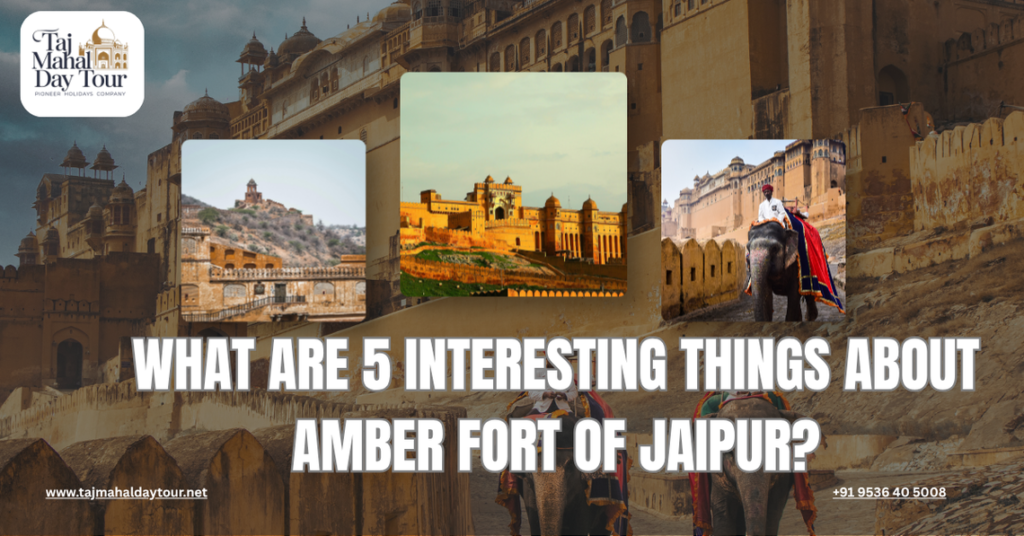
The moment you catch your first glimpse of Amer Fort rising from a rocky hilltop on the outskirts of Jaipur, something shifts inside you. It does not look like a building. It looks like a story — one told in amber sandstone and white marble, carved over four centuries with the hands of warriors, artists, and royals.
Most visitors arrive expecting a pretty palace. They leave stunned.
Amber Fort Jaipur is not just a monument you photograph and move on from. It pulls you in through its layered courtyards, whispers secrets through its underground tunnels, and dazzles you inside a hall built entirely of mirrors. For anyone serious about exploring Jaipur tourist attractions, Amber Fort sits firmly at the top of the list — not because guidebooks say so, but because it earns that position every single visit.
So what makes this fort so unforgettable? Let’s walk through five genuinely interesting things about Amber Fort that most people never fully appreciate.
Quick Overview: Amber Fort at a Glance
| Feature | Details |
| Location | Amer, 11 km from Jaipur city center |
| Built By | Raja Man Singh (construction started in 1592) |
| Architectural Style | Blend of Rajput and Mughal styles |
| UNESCO Status | Part of Hill Forts of Rajasthan (inscribed 2013) |
| Entry Fee | ₹100 (Indians) / ₹500 (Foreigners) |
| Best Time to Visit | October to March |
| Timings | 8:00 AM – 5:30 PM (Light & Sound Show: evenings) |
| Time Needed | 2 to 4 hours |
Why Amber Fort Jaipur Stands Apart from Other Rajasthan Forts
Rajasthan has no shortage of forts. Jaisalmer, Chittorgarh, Kumbhalgarh — each one carries its own legend. But Amber Fort holds a different kind of energy. It served not just as a military stronghold, but as a royal residence, a spiritual center, and a political statement all rolled into one.
The fort sits above Maota Lake, whose still waters reflect the fort’s silhouette every morning. That view alone draws photographers from around the world. But the real magic lies inside — in the details most visitors rush past.
5 Interesting Things About Amber Fort
1. The Sheesh Mahal — A Palace Built from One Million Mirrors
If you visit only one room inside Amber Fort, make it the Sheesh Mahal — the Palace of Mirrors.
Walk inside, light a single candle, and the entire ceiling comes alive. Tiny convex mirrors — over one million of them — cover every surface. The flame multiplies across the walls, the ceiling, the floor, until the room looks like a star-filled sky frozen inside stone.
This was not decoration for decoration’s sake. The Rajput kings designed the Sheesh Mahal so that royals could bathe in private, lit only by this mirror-amplified candlelight, without candles burning too close to their silk clothes or skin. It was, in every sense, 16th-century engineering meeting royal luxury.
Today, the mirrors still hold their polish. Conservation teams work carefully to maintain them. Running your eyes across the ceiling, you feel the kind of awe that does not need a caption.
Quick tip: Visit the Sheesh Mahal in the morning when natural light enters through the jharokha windows. The effect intensifies compared to midday visits.
2. The Underground Tunnel to Jaigarh Fort — Rajputana’s Best-Kept Secret
Here’s something many casual visitors completely miss: Amber Fort connects to Jaigarh Fort — perched higher on the same ridge — through a secret underground tunnel.
This tunnel stretches roughly 2 kilometers. The royal family used it as an emergency escape route during sieges or attacks. If enemies breached Amber Fort’s walls, the royal family could disappear through this passage, surfacing safely inside Jaigarh’s stronger defenses.
The tunnel also reportedly served as a transfer route for weapons and supplies during times of conflict. Today, visitors can explore parts of it, though the full length remains restricted.
What makes this detail truly fascinating is what it reveals about Rajput military thinking. They did not just build forts to fight from. They built them with survival in mind — layered defenses, contingency plans, escape routes hidden in plain sight.
Bonus fact: Jaigarh Fort houses the world’s largest wheeled cannon, Jaivana. Many historians believe the cannon was never actually fired in battle — it was built as a show of power.
3. The Rajput-Mughal Architecture Blend — Two Empires, One Building
Stand in any of Amber Fort’s main courtyards and look carefully at the walls around you. You’ll notice something unusual: the architecture does not belong to one style. It belongs to two.
Rajput architecture favors bold geometric carvings, ornate jaali screens (perforated stone lattice work), and chhatris (dome-shaped pavilions). Mughal architecture brings in elaborate inlay work, Persian floral motifs, and symmetrical garden layouts.
Amber Fort carries both — seamlessly.
This happened because Raja Man Singh served as one of the most trusted generals under Emperor Akbar. The alliance between the Rajput king and the Mughal emperor was not just political. It showed up in stone. Artisans from both traditions worked together on Amber Fort, creating a visual language that neither culture had produced alone.
Elements to look for inside the fort:
- Rajput influence: Elephant motifs, ornate stone carvings on pillars, angular geometric patterns
- Mughal influence: Pietra dura inlay work (colored stones set into marble), Persian arched doorways, symmetrical fountain arrangements
- Shared innovation: The stunning mirror-work in Sheesh Mahal draws from both Persian mirror palace traditions and Rajput craftsmanship
This fusion makes Amber Fort architecturally unique, even within Rajasthan.
4. The Light and Sound Show — History Told After Dark
When the sun drops behind the Aravalli hills and the fort goes quiet, something else wakes up.
Every evening, Amber Fort hosts a Light and Sound Show that traces the history of Jaipur and the Kachhwaha Rajput dynasty that built this fort. Colored lights sweep across the fort’s walls while a narration — available in Hindi and English — walks visitors through centuries of battles, alliances, royal intrigues, and architectural triumphs.
The show lasts about 50 minutes. The walls seem to speak. The fort transforms from a daytime tourist attraction into something that feels genuinely alive.
For travelers who visit Amber Fort during the day and find the crowds overwhelming, the evening show offers a completely different experience — quieter, more atmospheric, and surprisingly emotional.
Practical details for the show:
- Timing: Usually begins around 7:00 PM (confirm locally, as seasonal timings vary)
- Tickets: Separate from daytime entry fees
- Seating: Arranged on the grounds outside the fort walls
- Language options: Hindi and English shows run on different schedules
5. The Elephant Ride Experience — A Royal Ascent
For centuries, Amber Fort’s royal guests arrived by elephant. The animals climbed the steep cobblestone path from the base of the hill to the Suraj Pol (Sun Gate) entrance, carrying kings, nobles, and honored visitors.
Today, travelers can still make that same ascent on elephant back.
The experience draws mixed reactions, which is worth addressing honestly. Animal welfare organizations have raised concerns about the conditions of elephants used for tourist rides. In response, local authorities and operators have introduced regulations limiting working hours and improving care standards. Before booking, travelers should ask guides about the specific operator’s welfare practices.
That said, for many visitors, the ride itself — the slow, swaying climb up the ancient pathway with the fort gates growing larger above you — remains one of the most vivid travel memories they carry home from Rajasthan.
Alternatives exist if you prefer to skip the elephant ride:
- Jeep service: Available from the base to the fort entrance
- Walking: A moderately steep 15–20 minute walk with excellent views
- Palanquin (doli): Traditional hand-carried chair option
Best Time to Visit Amber Fort
The ideal window for visiting Amber Fort Jaipur runs from October through March. During these months, the weather stays cool enough for comfortable exploration — temperatures range between 8°C and 25°C, making long walks through the fort pleasant rather than exhausting.
Avoid peak summer (April–June): Temperatures regularly cross 40°C, and the stone surfaces of the fort absorb and radiate intense heat. If you must visit in summer, arrive right when the gates open at 8:00 AM.
Monsoon (July–September): The surrounding landscape turns unexpectedly green, and the crowds thin noticeably. The Maota Lake fills up, making the reflection views spectacular. However, some pathways get slippery, and afternoon showers are common.
Practical Travel Tips for Amber Fort Visitors
Getting there:
- Amber Fort sits 11 km from Jaipur’s city center
- Auto-rickshaws, taxis, and app-based cabs all run regular routes
- Many travelers combine it with Jaigarh Fort on the same day
What to carry:
- Comfortable walking shoes — the cobblestones are uneven
- Water bottle (vendors inside sell water but at higher prices)
- Sunscreen and a hat for daytime visits
- A small flashlight if you plan to explore darker interior corridors
Photography:
- The fort allows personal photography
- The Sheesh Mahal prohibits flash photography to protect the mirrors
- Best exterior shots come from the road below near Maota Lake
Guided tours:
- The Archaeological Survey of India (ASI) offers licensed guides at the entrance
- A guided tour typically adds 90 minutes but reveals details you’d otherwise walk past entirely
Conclusion: Amber Fort Deserves More Than an Afternoon
Amber Fort does not reveal everything in one visit. Come back a second time and you’ll notice carvings you missed entirely. Catch the light show and the daytime tour, and you’ll feel like you’ve visited two different forts in the same location.
The five things covered here — the mirror palace, the underground tunnel, the architectural fusion, the evening show, and the elephant traditions — only scratch the surface. Every corner of this fort carries a story. Every corridor holds a detail that rewards attention.
If you’re planning a trip to Jaipur and want to experience the fort alongside other remarkable Jaipur tourist attractions, consider exploring curated Jaipur Tour Packages that combine Amber Fort with Hawa Mahal, City Palace, Jantar Mantar, and more into a single well-organized journey.
Taj Mahal Day Tour specializes in crafting travel experiences across Rajasthan that go beyond surface-level sightseeing — helping travelers connect with the history, culture, and architecture that make places like Amber Fort genuinely unforgettable. Whether you’re a first-time visitor or returning for another look, they build itineraries designed around what you actually want to experience.
Amber Fort has stood for over four centuries. It will outlast every travel trend, every guidebook edition, every Instagram caption written about it. Visit it with curiosity, take your time, and it will give you something worth carrying home.